Garden guides
How to plant trees for shade and privacy
Planting the right trees can add shade and privacy for years. Learn how to choose species, place them safely, and work with a landscape pro—then get free help finding one near you.
Start with the goal (shade, privacy, and safe growth)
Before you dig, be clear about what you want the trees to do. Shade usually means you’re aiming to cool an area—like a patio or driveway—at certain times of day.
Privacy is different. It’s about visual screening from roads or neighbors. That means you’ll want enough density (how “thick” the view block is) and a location that doesn’t interfere with sidewalks, windows, or fences.
Also think about long-term size. Many trees grow taller and wider than people expect. A good plan balances your goals with space, sunlight, and the things you must protect, like house foundations, utility lines, and sidewalks.
- Shade: consider where the sun hits in summer and where you want cooling.
- Privacy: consider sight lines from neighbors, streets, and second-story windows.

Choose trees that fit your climate, soil, and maintenance comfort
Trees are not one-size-fits-all. Your region’s climate, your soil drainage (how quickly water moves through soil), and local rainfall patterns all affect what will grow well.
If you’re not sure where to start, begin by looking for native or well-adapted species for your state or local area. Native trees often match local conditions better. Still, your site matters—one neighborhood can be rockier or drier than another.
Think about maintenance, too. Some species need more pruning, drop leaves or fruit, or attract certain insects. If you want low-effort care, plan for that now rather than after planting.
- Prefer species that match your local climate and typical soil conditions.
- Check mature height and spread so roots and branches have room.
Find the right location: measure first, then check utilities and setbacks
Tree placement is one of the biggest factors for success and safety. Measure where you want the tree (or row of trees), then compare that space to the tree’s mature size. A small sapling can become a problem years later if it’s too close to a home, driveway, or fence.
Before you dig, check for underground and overhead utilities. In the US, you can request utility locates so lines are marked before planting or digging. This helps you avoid dangerous contact with power, gas, water, or telecom lines.
Also look for local rules. Many cities have setback requirements (how far a tree must be from structures or property lines) and may require permits for certain tree types or removals. These rules vary by location, so confirm what applies where you live.
- Use mature height and spread, not the current size of the sapling.
- Request utility locates before digging.
- Check local tree planting or permitting rules.
Spacing for privacy: think in rows, density, and long-term shaping
For privacy, you usually need a planting plan—not just one tree. A row of trees can create a “screen,” but spacing determines how quickly the view gets blocked.
Spacing depends on the mature width of the species you choose. If trees are too far apart, gaps appear as they grow. If they’re too close, they can compete for sunlight and space, making pruning harder later.
Also plan for how you’ll shape them over time. Some trees naturally grow into a good form. Others need training (light, careful pruning) to keep branches strong and reduce future crowding. This is where working with a landscape pro can help you plan the spacing, layout, and care approach.
- Privacy screening often needs a row or cluster, not a single tree.
- Spacing should follow the tree’s mature width and your sight-line needs.
Planting basics that protect roots and help the tree settle in
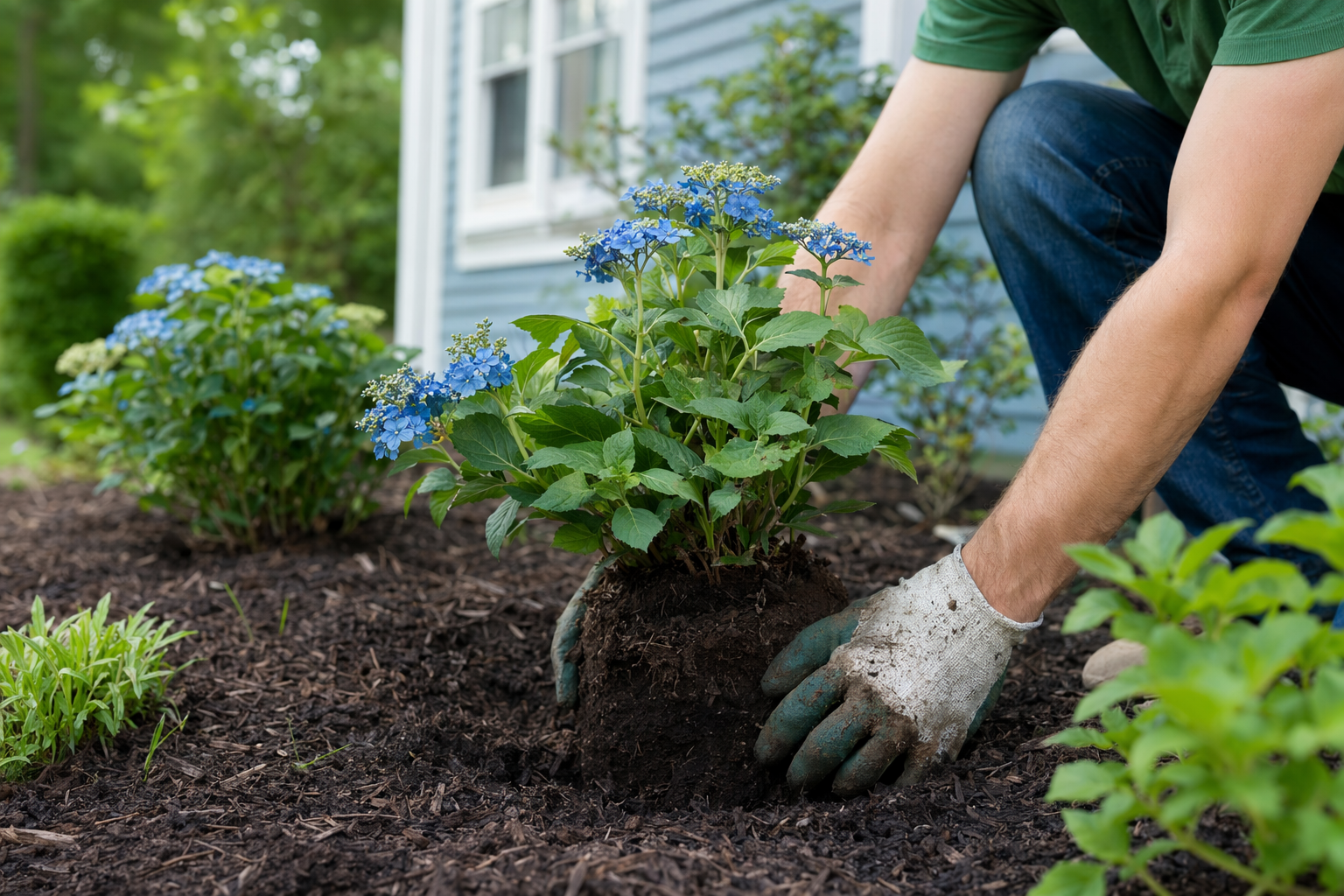
Planting is usually straightforward, but small mistakes can cause big problems. A common goal is to keep the root system healthy and avoid planting too deep. When the trunk sits too low—or the root flare (where the trunk meets the roots) is covered—trees can struggle.
Use the right planting hole. In general, you want a hole wide enough to spread roots without bending them sharply. The depth matters, too: match the root flare height to the surrounding ground level.
After planting, water deeply so moisture reaches the root zone. How often depends on your soil, weather, and season. Avoid “light, frequent” watering that only wets the surface. And be mindful of mulch: mulch can help reduce weeds and moderate soil moisture, but it should not pile against the trunk.
- Avoid planting too deep—protect the root flare.
- Water deeply enough to reach the root zone, not just the surface.
Work with a landscape pro: what to ask, and what to confirm in writing
Verdorra helps you find and connect with a landscape design-build pro who can guide you through planning and installation. We’re not a landscaper or contractor, and we don’t do the work ourselves. But we can help you get a clearer plan and better questions ready before anyone starts.
When you talk with pros, ask about their approach to site conditions, tree placement, and the surrounding landscape. For example, you can discuss whether your plan includes hardscape vs. softscape (hardscape is paths, patios, walls; softscape is living plants like trees and shrubs), and how irrigation might work if you’re planting in areas that need supplemental watering.
Most importantly: confirm the design, scope (exact work to be done), and price in writing before work starts. Also verify that the pro is licensed and insured where required, and ask how they handle permits and utility-locate coordination. If drainage or grading comes up, ask what’s being planned and why, and make sure it’s handled by the right professional for your area—not guessed on the spot.
If you’re comparing options, see how costs work and explore services to understand what a tree planting project can include.
- Ask about site conditions, placement, and how the plan fits your shade/privacy goals.
- Confirm design, scope, and price in writing before work starts.
- Verify license + insurance, and coordinate permits + utility-locates.

Pick trees sized for your space, place them safely with utility-locate and permit checks, plant at the right depth, and if you need help, use Verdorra to connect with a landscape design-build pro—without any guarantees.