What we plan
Grading and drainage: fixing slope, runoff, and soggy yards
Bad slope and poor drainage can leave yards muddy, damaged, or hard to use. We help you understand the basics and connect you with a landscape pro who can assess the site and suggest options.
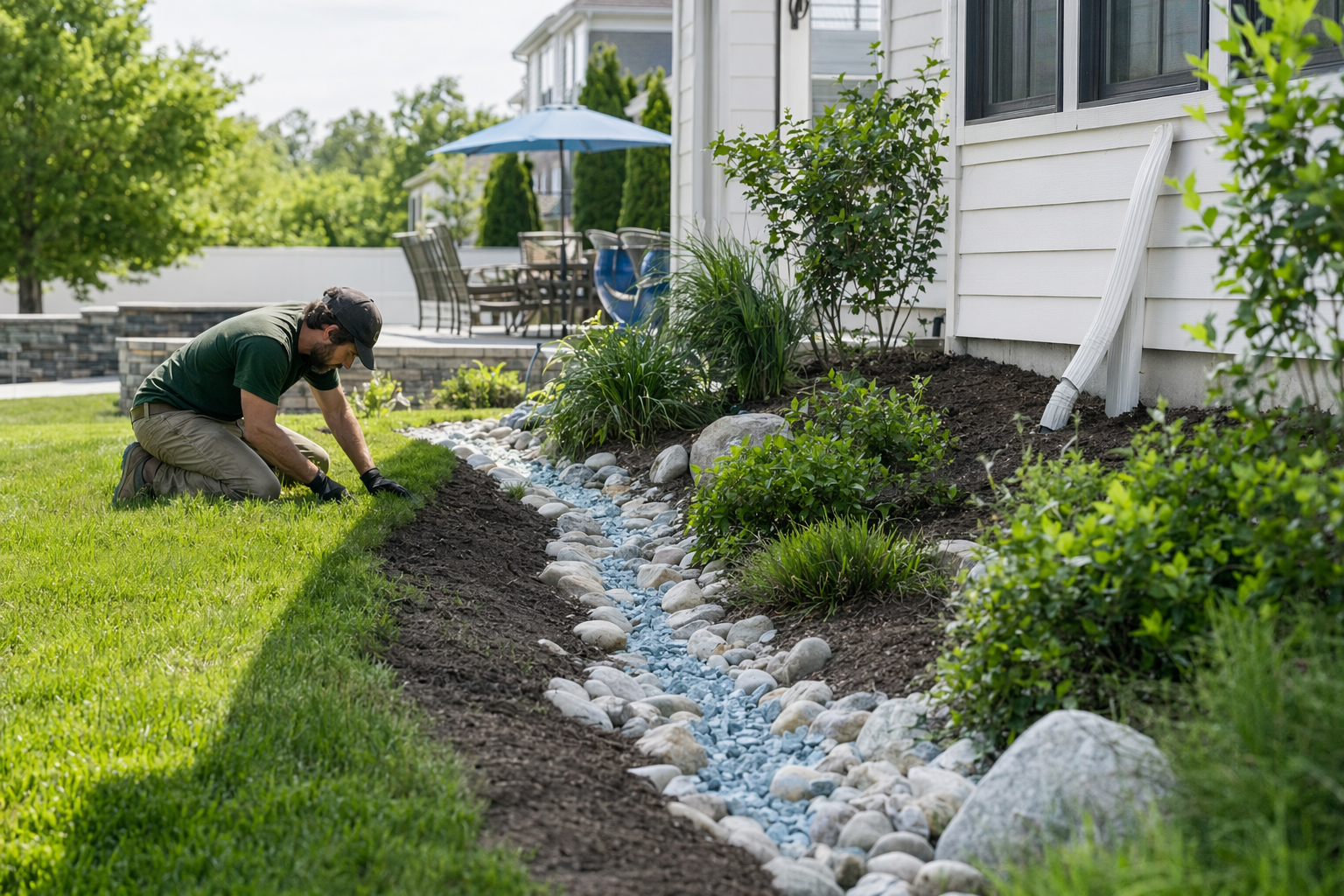
What grading and drainage mean
Grading means shaping the ground so water moves away from the house and other sensitive areas. Drainage means the paths and parts that help water go where it should, instead of pooling in low spots or rushing across the yard.
Grading is about the land itself. Drainage can include simple changes like adding swales (shallow channels that guide water), French drains (a buried pipe with stone that collects and moves water), downspout extensions, catch basins, or rain gardens. The right mix depends on your soil, slope, rain, and local rules.
If your yard stays soggy, washes out, or sends water toward the foundation, this is usually the first problem to solve before any planting, patio, or other finish work.
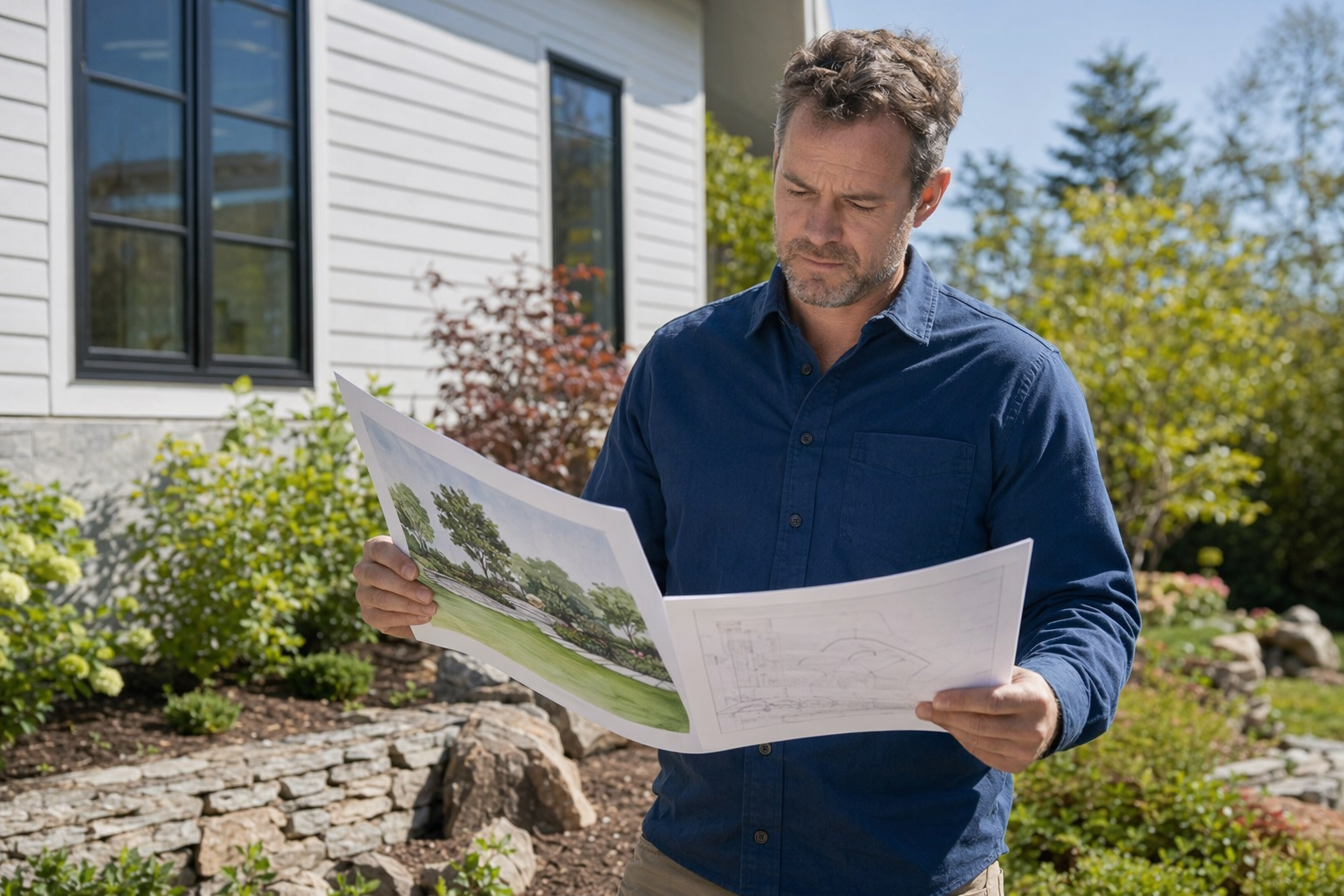
Why this work comes before the pretty parts
A yard that is not draining well can damage new features. Water can settle under pavers, flood planting beds, rot roots, and make lawns thin or patchy. In some areas, the bigger concern is water near the home, garage, fence, or neighboring property.
That is why grading and drainage often come before hardscape vs. softscape decisions. Hardscape means built features like patios, walkways, retaining walls, and steps. Softscape means living parts like soil, lawn, shrubs, and trees. If the ground is not handling water well, both can suffer.
A design-build pro can look at the site, talk through what the yard needs, and suggest a practical order of work. We do not do the work ourselves. We help you find a landscape pro who does.
Common fixes for slope, runoff, and soggy areas
There is no one-size-fits-all fix. A small low spot may only need soil reshaping and a better outlet for roof water. A steeper or more complex yard may need several parts working together.
Common approaches include:
- Regrading small areas to create a gentle slope away from the house
- Extending downspouts so roof water is carried farther from the foundation
- Adding a French drain to collect water underground
- Building a swale to move water across the yard safely
- Installing a catch basin where water gathers in one spot
- Using permeable pavers, which let water pass through gaps or a porous surface
- Planting water-tolerant areas or a rain garden where runoff can soak in
The best option depends on your lot size, soil type, existing trees and roots, access for equipment, and local stormwater rules. In some places, utility-locate calls and permits may be needed before digging.
What it may cost and what affects the price
Costs vary a lot. A simple downspout change or small grading fix is usually much less than a larger drainage system that needs excavation, pipe, stone, or new hardscape. Yard size, slope, soil, access for machines, and seasonal conditions all affect the price.
For general planning, it helps to look at our cost guide and then ask for a site-specific estimate. A range is not a quote. It is only a rough planning tool until someone sees the property.
Before work starts, ask for the scope in writing. That should spell out what areas will be changed, what materials will be used, where water is expected to go, and what is not included. Also verify license and insurance yourself, and check whether permits or utility-locates are needed in your area.
How Verdorra helps you move forward
If you are dealing with a wet, sloped, or eroding yard, you can start by learning the basics and then get matched with a landscape pro who works on drainage and grading. Our matching service is free for homeowners.
Use how it works to see the steps, or go straight to get matched if you want help finding a pro. We help you find a landscape design-build professional who can review the site and talk through practical options.
We are not a landscaper, contractor, or design firm. We do not do the work, and we do not give engineering, drainage, grading, arborist, structural, legal, or financial advice. The pro you choose should confirm the final plan, scope, and price in writing before any work begins.
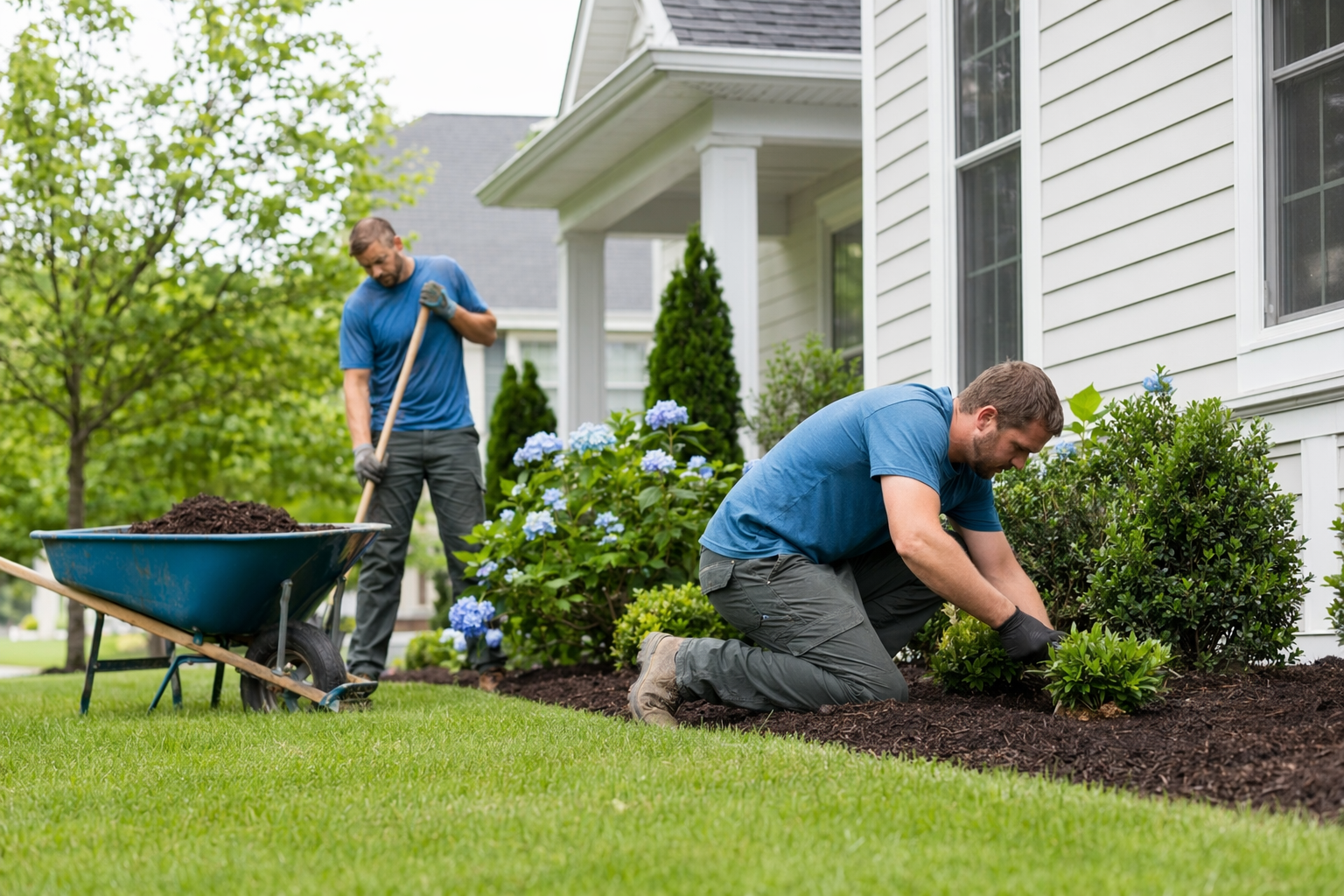
Grading and drainage fix how water moves through your yard, and Verdorra helps you learn the basics and find a landscape pro to assess your site.