Quick answers
How a new family turned a bare yard into a garden
A bare yard can feel overwhelming, especially after a big move. Here is one anonymized example of how a family used a simple plan and a landscape pro to turn an empty space into a garden they could actually use.

The starting point
This family had just moved into a home and wanted the yard to feel calmer and more welcoming. The space was mostly open soil with a few problem spots, and they were not sure where to start.
They also wanted something practical. The yard needed room for kids to play, a small area for plants, and a layout that would be easier to care for over time. Like many homeowners, they did not want to guess at plant names, layout, or what should come first.
Because climate, soil, and local rules vary by region, they knew the right answer would depend on the property itself. That is where a design-build pro helped them sort through options step by step.
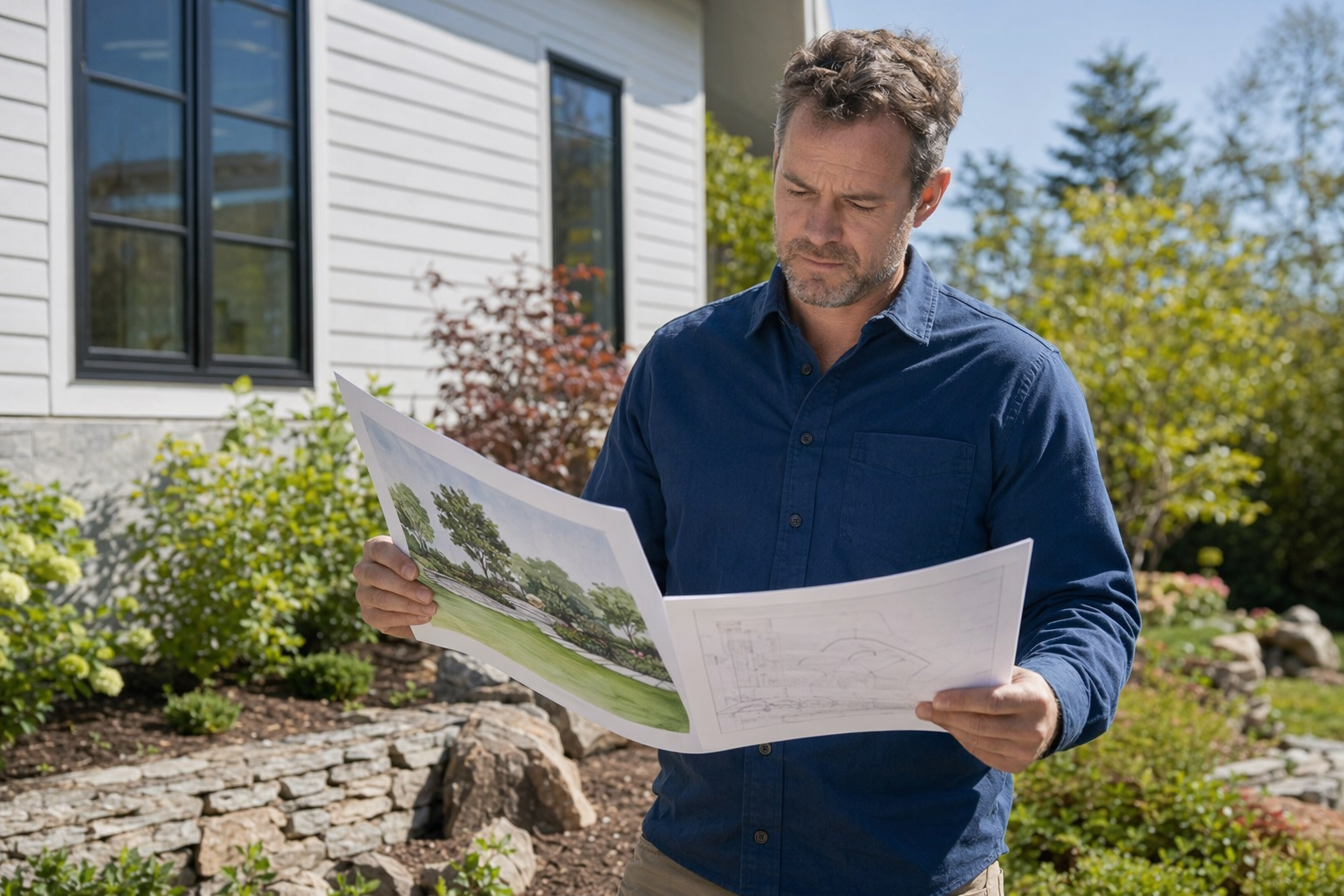
How they got help
They used Get matched to connect with a landscape design-build pro. A design-build pro is one company or team that helps with both the plan and the work, so the design and construction can be aligned from the start.
First, they shared photos, basic yard measurements, and what they hoped to use the space for. Then the pro looked at the site, talked through sun, shade, access, and how the family wanted to use the yard.
We do not do landscaping work ourselves. Verdorra is a free matching service that helps you find a landscape pro, and the homeowner still needs to verify license and insurance, check local permits and utility-locates, and confirm the design, scope, and price in writing before work starts.
What changed in the plan
The family did not try to solve everything at once. The pro helped them focus on a few simple parts: a clear path from the house, a planting area for color and privacy, and a small open section for everyday use.
They also learned the difference between hardscape and softscape. Hardscape means the built parts of a yard, like paths, edging, or patios. Softscape means the living parts, like grass, shrubs, flowers, and trees.
That basic split helped them make choices. The built parts shaped how people moved through the yard. The planting areas made the space feel warm and green without crowding everything else.
The work and the budget conversation
Before any work began, they asked for the plan in writing. That included the materials, plant types, what was included, what was not included, and how changes would be handled.
They also talked about cost in plain words. The final price depended on yard size, access to the site, materials, season, and local labor rates. It was a real project, not a quote based on someone else’s yard.
A clear written scope helped them avoid confusion later. If a homeowner is unsure about options, it can help to ask the pro to explain terms like grading and drainage. Grading means shaping the ground so water moves the right way. Drainage means how water leaves the yard so it does not pool near the home.
What they ended up with
The finished yard felt much more usable. The family had a simple path, a planting area with layered greenery, and enough open space to keep the yard from feeling crowded.
They also added drip irrigation in part of the garden. Drip irrigation is a watering method that sends water slowly to the base of plants instead of spraying the whole yard. It can be helpful for certain plant beds, but the best setup depends on the site and local conditions.
This was not a miracle fix, and no one promised every plant would survive. What made the difference was a clear plan, realistic choices, and a pro who could explain the work in a way the family understood.
What other homeowners can learn
If your yard feels like a blank page, start with use. Ask what you need the space to do first: play area, privacy, shade, flowers, cooking, or easier maintenance. A simple list can make decisions much easier.
Then gather a few basics before you meet with a pro: photos, rough measurements, where water pools, where sun hits, and what you like or dislike. If language is a barrier, bring notes or pictures. Clear communication saves time.
You can also browse more real-world examples in Stories or learn about the kinds of help available through Services.
A new family used a simple plan and a landscape pro to turn a blank yard into a usable garden, and the big lesson was to get everything clear in writing before work starts.