What we plan
Irrigation and sprinklers: watering your yard the smart way
Learn how sprinkler and drip irrigation systems work, and what to ask for so your yard gets the right water at the right time. Verdorra is free and helps you find an irrigation pro.
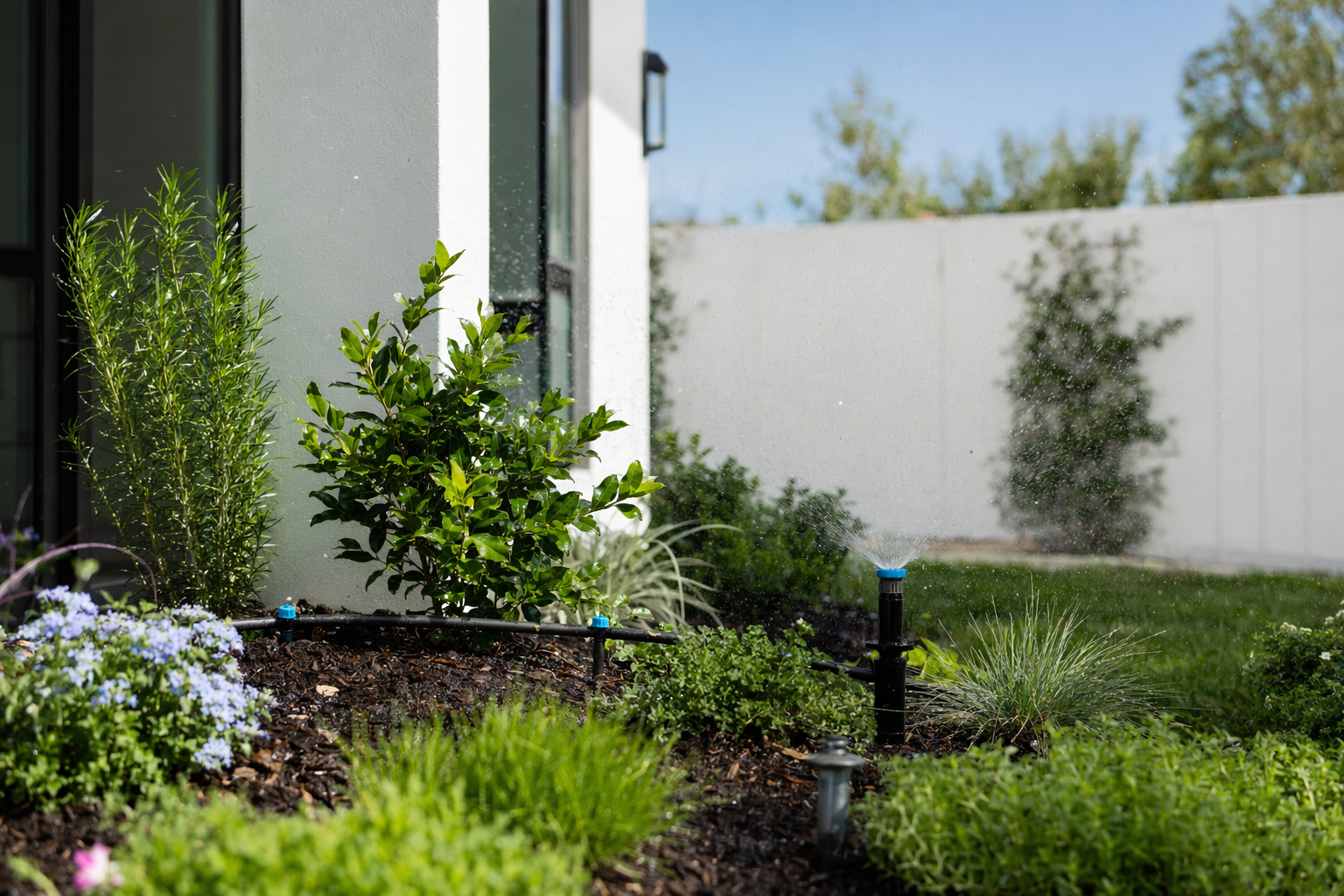
How irrigation works (sprinklers vs. drip) — the basics
Irrigation means adding water to your yard in a planned way, instead of relying only on a hose or manual watering. A good system matches the water needs of each area and delivers it efficiently.
Two common types are sprinkler irrigation and drip irrigation. Sprinklers spray water from above, while drip irrigation delivers water slowly through tubing and emitters near the soil. Many yards use a mix so lawns and beds get the right type of watering.
Before you choose a design, think about your water source and how your yard is laid out. Slope, sun exposure, wind, soil type, and how close you are to buildings can affect how water moves and where it ends up.

Key parts of an irrigation system (what you’ll hear in quotes)
Most residential irrigation systems include several parts. Knowing the names can help you ask better questions and compare proposals.
Common components include:
• Sprinkler heads (the part that sprays water)
• Nozzles and rotors (the parts that shape spray or distance)
• Drip lines and emitters (small devices that slowly release water)
• Valves (controls that turn zones on and off)
• Backflow preventers (a safety device that helps protect your water supply)
• Smart controllers (timers that run schedules and may adjust watering)
A “zone” is an area that gets watered separately. Zones matter because lawns, shrubs, and planting beds often need different watering amounts. When a system has the right number of zones, it can avoid overwatering and underwating.
Smart controllers and water-wise design
Smart controllers are irrigation timers that connect to Wi‑Fi or another connection and run watering schedules automatically. Some can use weather data (like rainfall) to adjust run times, and many let you set watering by zone.
Water-wise design means planning irrigation to reduce waste. That can include matching sprinkler types to the area, using drip where it makes sense, and setting schedules based on soil and plant needs.
If your area has watering restrictions, ask your pro how they handle them. Rules can change by season or local ordinance, and the system should fit your region’s requirements.
Costs: what homeowners typically budget for (not a quote)
Irrigation costs vary a lot because yards vary. Pricing can change based on yard size, number of zones, sprinkler layout, trenching/access (especially around sidewalks or driveways), the complexity of mixing sprinkler and drip, and local permit requirements.
Instead of guessing, a good next step is to review typical cost factors with a licensed and insured irrigation pro. You can also explore practical budgeting guidance here: irrigation costs.
Important: always ask for the design, scope, and price in writing before work starts. Don’t rely on a verbal estimate.
Get ready to talk to an irrigation pro (questions that help)
When you contact an irrigation pro, come prepared with a few details. This helps them design a system that fits your yard and your daily life.
Consider asking:
• What type of system do you recommend for my layout—sprinklers, drip, or a mix?
• How many zones do I need, and why?
• How will you protect the water supply (backflow prevention)?
• What will you include in the scope (heads, valves, drip lines, controller, wiring, testing)?
• What permits are needed in my area, and will you coordinate scheduling for required inspections?
For safety and peace of mind, verify license and insurance yourself. Also check local requirements and make sure utilities are located before digging. Your pro should explain what they do and what you are responsible for.
How Verdorra helps you find the right irrigation pro (for free)
Verdorra is a free matching and guide service for homeowners. We help you describe your yard and goals, and then we help you find a qualified landscape design-build pro who can discuss irrigation options.
Start here: get matched. If you want to browse first, see all our services at services.
To learn the planning flow, read: how it works. We focus on helping you prepare for a real conversation—then you confirm the design, scope, and price in writing with the pro you choose.

Irrigation uses sprinklers, drip lines, zones, and smart controllers to water efficiently—Verdorra is free and helps you find an irrigation pro, while you confirm the scope, permits, and written price before any work starts.