Garden guides
How to plan a landscape design on any budget
A good landscape plan starts with your goals, your yard, and your budget. This guide shows how to think through the work, compare options, and decide when to use a pro.
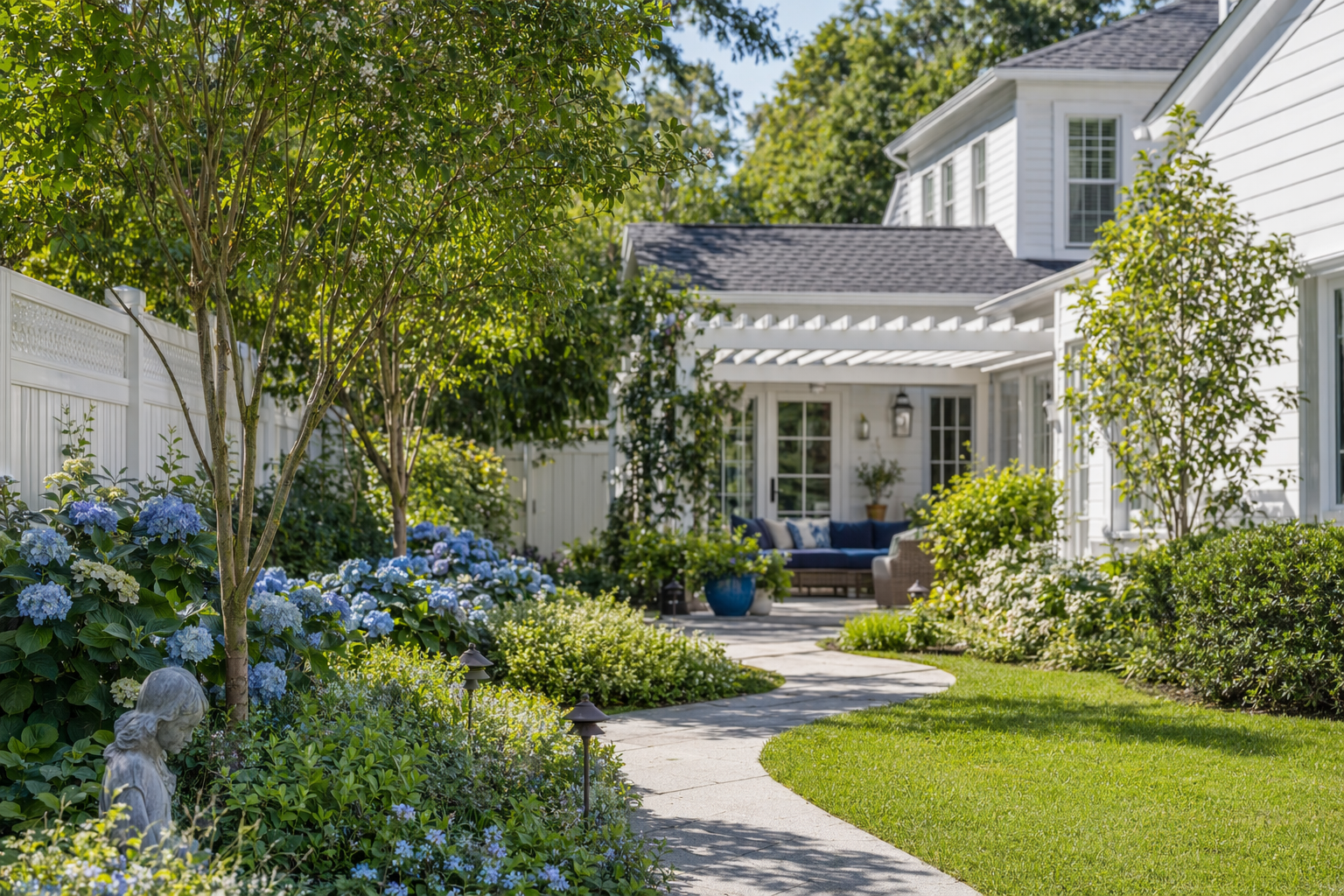
Start with the yard problems you want to solve
Before you think about plants or pavers, write down what is not working now. Maybe the front yard feels bare, the slope washes water toward the house, or the backyard is hard to use with kids or pets.
It helps to separate “must-fix” issues from “nice-to-have” ideas. Must-fix items might include drainage, broken walkways, poor access, or too much sun in the wrong spot. Nice-to-have items might include flower beds, a patio, privacy screening, or outdoor lighting.
If you are new to yard work, start small. A simple plan for one area is often easier to manage than trying to redo the whole property at once.

Learn the basic parts of a landscape plan
A landscape design is a plan for how the yard will look and function. It usually includes hardscape and softscape. Hardscape means the built parts, like patios, paths, retaining walls, steps, and edging. Softscape means living parts, like grass, shrubs, trees, and garden beds.
You may also hear words like grading and drainage. Grading means shaping the ground so water moves the right way. Drainage means helping water leave the yard instead of pooling near the home. These are important, but they are not the same as a decorative plant plan.
Another common term is design-build. That means one landscape company handles both the design and the building work. Some homeowners like that because it can simplify communication. Others prefer to compare separate design and install options.
Set a budget range before you ask for ideas
A clear budget does not need to be exact, but it should be honest. Think in ranges and include a little room for surprises, because yard size, access, soil, materials, and local labor costs all affect the final price. Climate and local rules also vary by region.
It helps to divide your budget into categories: planning/design, site prep, hardscape, planting, irrigation, lighting, and a small reserve for changes. Drip irrigation means a watering system that sends water slowly to the base of plants. It can be useful in dry areas or for beds that need steady watering.
If your budget is tight, focus on the highest-impact changes first. For example, a cleaner entry path, a simple planting bed, or better drainage may matter more than adding every feature at once. You can build the yard in phases over time.
Choose where to spend and where to simplify
Not every part of a yard needs the same level of finish. A front entry may deserve more attention because it shapes curb appeal and daily use. A side yard or back corner may only need basic cleanup, mulch, or a simple path.
A few ways to simplify a plan are to reduce the number of materials, keep shapes simple, and choose plants that fit your sunlight and climate. Native or well-adapted plants can be a practical choice, but they still need the right care and placement.
If you are comparing options, ask what each item does. For example: does this wall hold back soil, or is it only decorative? Does this lighting improve safety, or is it only for looks? Asking these questions can help you spend on work that truly helps your yard.
When to bring in a landscape pro
A landscape pro can be helpful when the project is larger, more complex, or harder to plan alone. That may include steep yards, drainage concerns, major planting changes, patios, retaining walls, or a full front-yard redesign. We help you find a landscape pro who can talk through your goals and help shape a plan.
Verdorra is free for homeowners. We are not a landscaper, contractor, or design firm, and we do not do landscaping work ourselves. We connect you with a pro so you can compare options and move forward with more confidence.
You can start here: get matched, learn more about services, or browse more guides.
How to compare proposals the right way
When you get a plan or estimate, ask for it in writing. Make sure it clearly lists the scope of work, materials, plant sizes, quantities, and what is included or excluded. If something is unclear, ask before work starts.
Always verify license and insurance yourself. Also check whether your project needs local permits or utility-locate calls before digging. Rules can vary by city, county, and state, especially for fences, walls, drains, and work near property lines.
A good proposal should help you understand the design choices, not just the total price. If possible, ask how the plan handles maintenance, watering, and seasonal care. That can help you choose a design you can actually keep up with.
Plan the yard around your biggest needs first, keep the scope realistic, and compare written proposals before you hire anyone.