Garden guides
How to fix a yard that floods or stays soggy
A soggy yard can ruin grass, leave muddy paths, and bring water toward your home. This guide explains common causes and simple ways homeowners can think about fixing it, then shows how we help you find a landscape pro for the job.
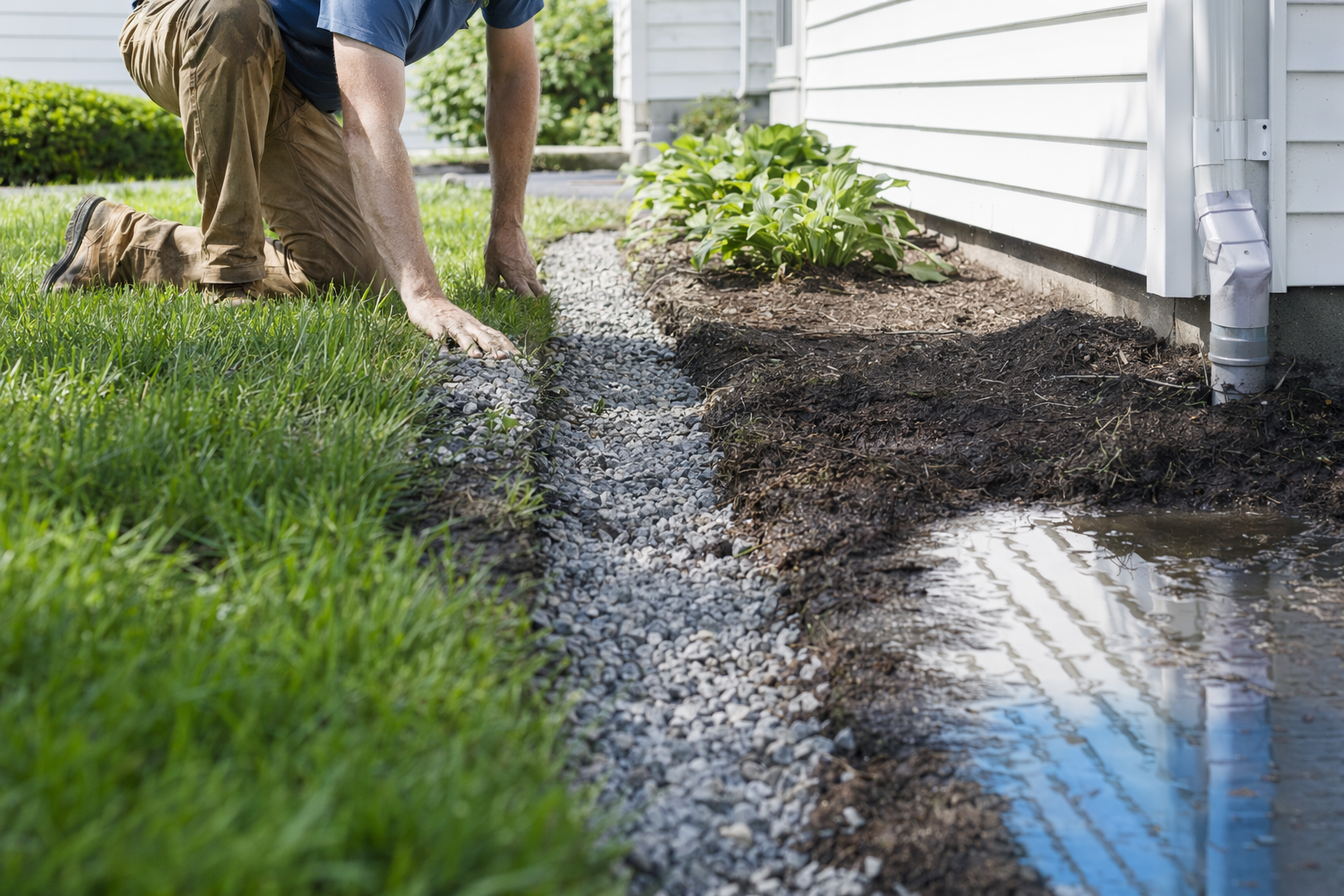
Why a yard floods or stays wet
Water usually sits in a yard for a few simple reasons: the soil drains slowly, the yard slopes the wrong way, or runoff from roofs, driveways, and nearby lots has nowhere to go. In some areas, heavy rain and clay soil make the problem worse.
"Grading" means the shape and slope of the ground. If the land slopes toward your house or forms a low spot, water can collect there after every storm. "Drainage" means how water moves away from the yard and foundation.
Sometimes the fix is small, like cleaning a clogged gutter or extending a downspout. Other times it takes a larger plan, such as changing the grade, adding a drain, or rebuilding parts of the yard. The right answer depends on your site, local weather, and local rules.

Common signs you may need drainage help
A yard does not have to be underwater to have a problem. If you see standing water hours after rain, spongy ground, algae or moss in shady areas, dying plants in wet spots, or muddy paths that never dry out, those are signs to look closer.
Also watch for water near the house after storms, damp basement walls, or mulch washing away. Those can be warnings that runoff is heading the wrong direction. If that is happening, it is smart to check the whole property, not just the wet spot.
A landscape pro can help you look at the site and talk through options. For broader yard-planning help, see our guides.
Fixes homeowners often consider
Many wet-yard projects start with simple steps: clean gutters, extend downspouts, fix compacted soil, and direct roof water away from problem areas. In some yards, a shallow swale helps. A swale is a gentle dip in the ground that guides water to a safer place.
Other common options include a French drain, which is a buried trench with gravel and pipe that helps move water underground, or a dry well, which is a buried structure that temporarily holds water and lets it soak into the soil. In yards with mixed hardscape and planting beds, the plan may also include changing the slope or replacing packed surfaces so water can move better.
Hardscape means the built parts of the yard, like patios, walkways, retaining walls, and edging. Softscape means the living parts, like grass, shrubs, trees, and mulch. Good drainage work often uses both together. A landscape design-build pro can help plan the layout and do the work in one process.
What the work may involve and what affects cost
Every yard is different, so costs can vary a lot. Yard size, access for equipment, soil type, how deep the work needs to go, the amount of pipe or stone needed, and whether permits are required can all change the price. Seasonal demand and local labor rates matter too.
Some jobs are mostly cleanup and minor regrading. Others may involve excavation, new drain lines, or replacing parts of a patio or walkway. If a project touches a foundation, retaining wall, stormwater system, or shared property line, local rules may be stricter.
For general cost topics, you can review our costs page. Any price range you see should be treated as a rough guide, not a quote. Always ask for the scope and price in writing before work starts.
How Verdorra helps you move forward
Verdorra is a free service that helps you find a landscape pro for a yard drainage or grading project. We are not a landscaper, contractor, or design firm, and we do not do the work ourselves. We connect you with a pro who can review your yard and discuss next steps.
If you are not sure where to begin, start with a short project description and photos. Then we help you match with someone who works in your area. You can use get matched to begin, or read more about our services first.
Before any work begins, verify the pro’s license and insurance yourself, check whether permits are needed, and confirm the design, scope, materials, and price in writing. It is also wise to ask about utility-locates before digging, since underground lines vary by location.

A wet yard usually means the ground, slope, or runoff path needs attention, and the safest next step is to learn your options, check local rules, and get a written plan from a qualified pro.